Introduction
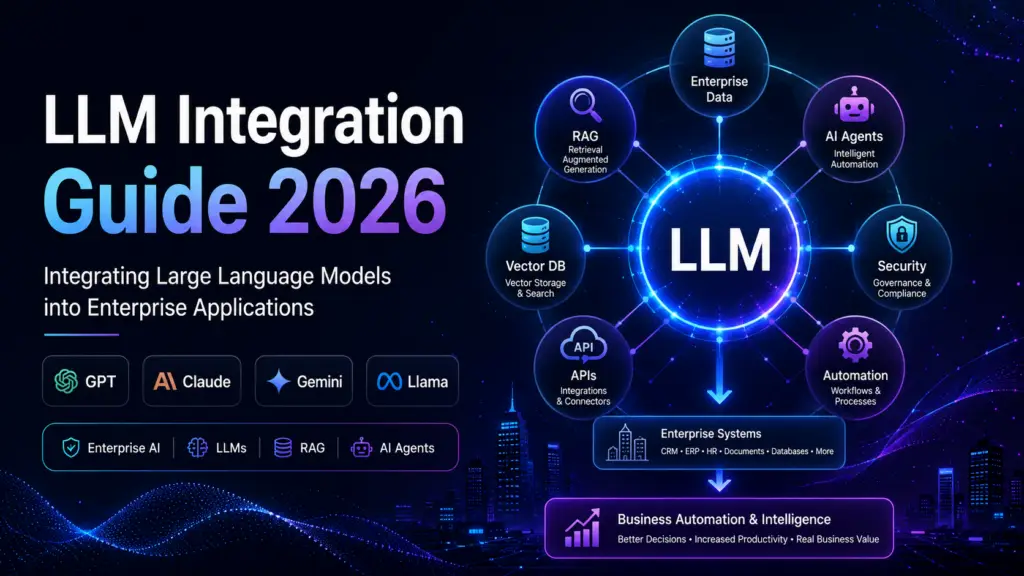
Large Language Models (LLMs) are transforming how enterprises build software, automate business processes, and interact with customers. Technologies such as GPT, Claude, Gemini, Llama, and Mistral have moved beyond experimental AI projects and are now powering a new generation of intelligent enterprise applications.
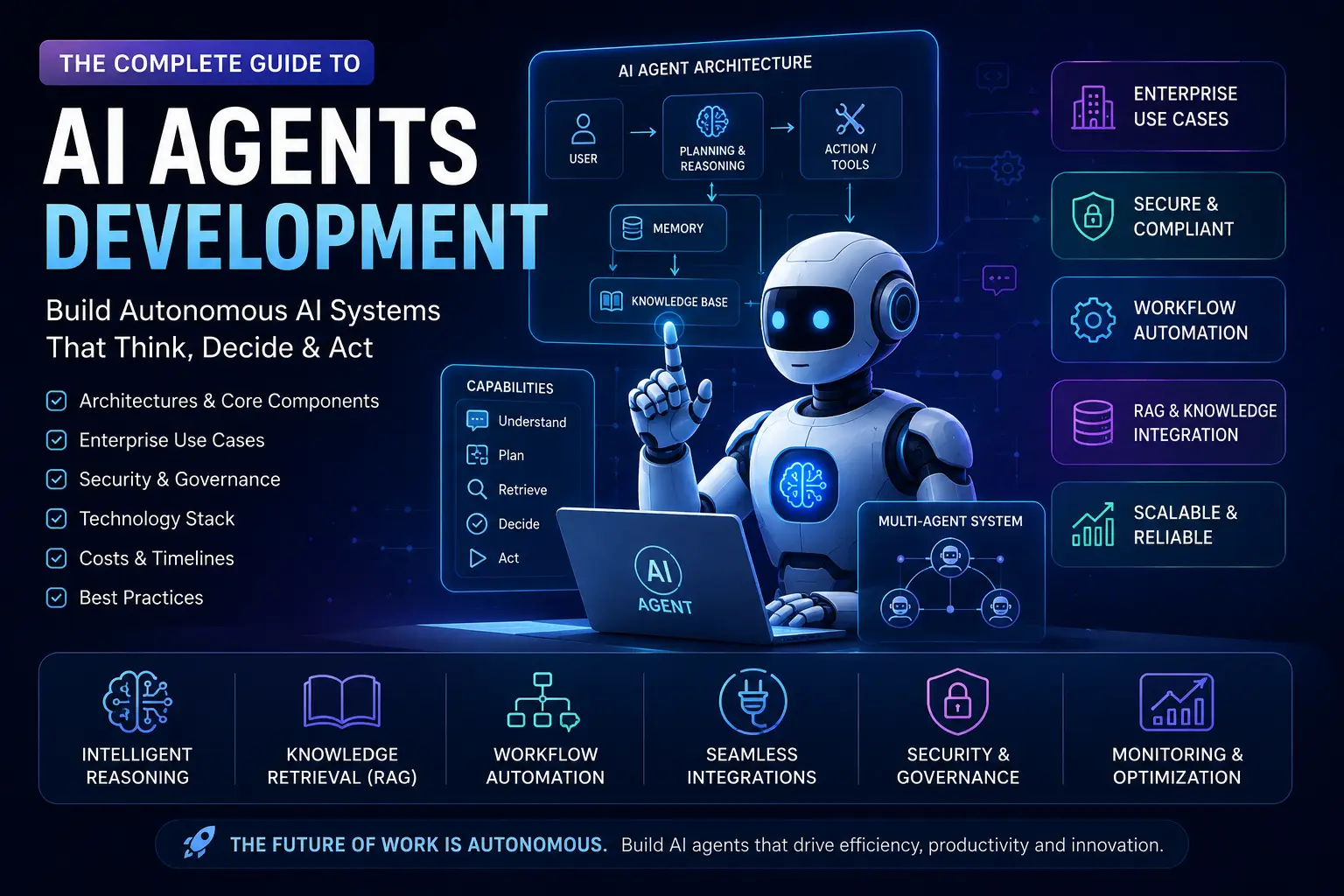
In 2026, organizations are integrating LLMs into customer support platforms, knowledge management systems, document processing workflows, enterprise search solutions, internal productivity tools, AI-powered SaaS products, and autonomous AI agents. Organizations building advanced automation systems often combine LLMs with AI agents to create intelligent workflows capable of reasoning, planning, and executing tasks across multiple business systems. Businesses that successfully leverage these technologies are gaining significant advantages through increased efficiency, reduced operational costs, faster decision-making, and improved customer experiences.
However, enterprise LLM integration involves far more than simply connecting an AI API to an application. Building reliable, scalable, and secure AI-powered systems requires careful consideration of architecture, model selection, prompt engineering, retrieval mechanisms, data privacy, compliance requirements, monitoring, governance, and cost optimization.
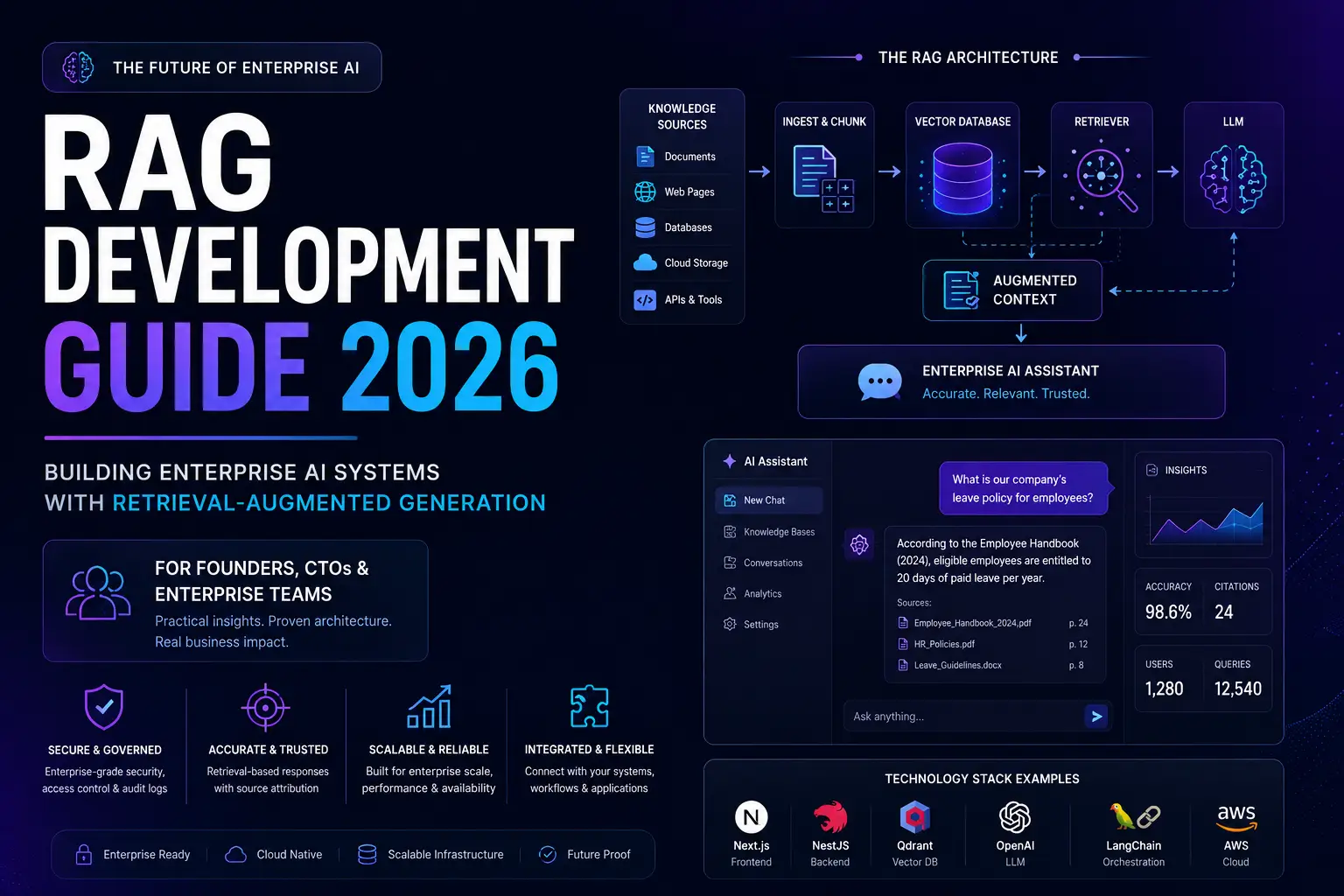
Many AI initiatives fail because organizations underestimate the complexity of integrating Large Language Models into real-world business environments.To improve accuracy and reduce hallucinations, many enterprises implement Retrieval-Augmented Generation (RAG) systems that allow Large Language Models to access trusted business knowledge in real time rather than relying solely on model training data. Common challenges include hallucinations, inaccurate responses, security risks, rising token costs, poor data quality, lack of observability, and insufficient alignment between business goals and AI capabilities.
A successful LLM integration strategy requires a comprehensive approach that combines the right technology stack, enterprise-grade security practices, robust data pipelines, and clear implementation objectives. Working with an experienced AI development team can significantly reduce implementation risks and accelerate enterprise AI adoption. Whether you’re building an intelligent customer support assistant, AI-powered document analysis platform, enterprise knowledge base, software development copilot, or industry-specific AI solution, understanding the fundamentals of LLM integration is essential.
In this guide, we will explore everything businesses need to know about integrating Large Language Models into enterprise applications in 2026. From core concepts and architecture patterns to security considerations, technology stacks, development costs, implementation timelines, and real-world enterprise use cases, this guide provides a practical roadmap for building successful AI-powered solutions.
Enterprises are also exploring the combination of AI and blockchain technologies to create secure, transparent, and intelligent business applications for industries such as finance, healthcare, supply chain management, and digital identity.
By the end of this guide, you’ll understand how modern enterprises are deploying LLM-powered applications, the challenges they face, and the best practices that separate successful AI projects from costly failures.
What You’ll Learn
Integrating Large Language Models into enterprise applications requires more than selecting a model provider and connecting an API. Organizations must understand how LLMs fit into their technology ecosystem, how to manage risks, and how to design systems that deliver measurable business value.
In this guide, you’ll learn:
- What Large Language Models are and how they work in enterprise environments.
- The differences between proprietary and open-source LLMs, and how to choose the right model for your business requirements.
- How modern enterprise LLM architectures are designed, including APIs, orchestration layers, vector databases, retrieval systems, and AI agents.
- How Retrieval-Augmented Generation (RAG) improves accuracy and reduces hallucinations in enterprise AI applications.
- The most common enterprise use cases for LLM integration across customer support, document processing, software development, knowledge management, and business automation.
- Security, privacy, compliance, and governance considerations when deploying AI solutions in regulated industries.
- The technology stack required to build scalable LLM-powered applications in 2026.
- The typical development costs, infrastructure requirements, and ongoing operational expenses associated with enterprise AI systems.
- Common implementation mistakes that cause AI projects to fail and how to avoid them.
- Best practices for selecting an AI development partner and successfully deploying enterprise-grade LLM solutions.
By the end of this guide, you will have a clear understanding of how to plan, design, develop, and scale Large Language Model integrations that deliver real business outcomes while maintaining security, reliability, and cost efficiency.
Core Concepts of Large Language Models
Before integrating Large Language Models into enterprise applications, it is important to understand the fundamental concepts that power modern AI systems. These concepts influence model performance, accuracy, scalability, cost, and overall user experience.
Large Language Models (LLMs)
Large Language Models are advanced AI systems trained on massive amounts of text data to understand, generate, summarize, translate, and analyze human language. Models such as GPT, Claude, Gemini, Llama, and Mistral can perform a wide range of tasks including content generation, question answering, document analysis, code generation, and conversational interactions.
Unlike traditional software systems that rely on predefined rules, LLMs generate responses by predicting the most likely sequence of tokens based on the context they receive.
Tokens
Tokens are the basic units of text processed by an LLM. A token may represent a word, part of a word, punctuation mark, or special character.
Enterprise AI costs are typically calculated based on the number of input and output tokens processed by the model. Understanding token usage is essential for estimating operational expenses and optimizing system performance.
Context Window
The context window represents the amount of information a model can process during a single interaction. Modern enterprise models support context windows ranging from thousands to millions of tokens.
A larger context window allows applications to analyze lengthy documents, maintain longer conversations, process complex business records, and support more sophisticated reasoning tasks.
Embeddings
Embeddings are numerical representations of text, documents, images, or other data types. They allow AI systems to understand semantic relationships between pieces of information.
Embeddings play a critical role in enterprise search systems, recommendation engines, knowledge management platforms, and Retrieval-Augmented Generation (RAG) architectures.
Prompt Engineering
Prompt engineering is the process of designing instructions that guide model behavior and improve response quality.
Well-structured prompts help organizations achieve more accurate, consistent, and reliable outputs while reducing hallucinations and operational costs. Effective prompt design remains one of the most important skills in enterprise AI development.
Retrieval-Augmented Generation (RAG)
One of the biggest limitations of Large Language Models is that they may generate incorrect or outdated information. Retrieval-Augmented Generation addresses this challenge by allowing models to retrieve information from external knowledge sources before generating responses.
RAG enables enterprises to build AI systems that can access company documents, policies, knowledge bases, support articles, and proprietary business data in real time.
Fine-Tuning
Fine-tuning is the process of training a pre-trained model on organization-specific data to improve performance for specialized tasks.
While fine-tuning can increase accuracy for certain use cases, many enterprises now combine prompt engineering and RAG architectures before considering custom model training due to lower costs and faster implementation timelines.
AI Agents
AI agents extend the capabilities of LLMs by enabling them to perform actions, interact with external systems, execute workflows, and make decisions based on predefined objectives.
Modern enterprise AI platforms often use AI agents to automate customer service, software development workflows, business operations, research tasks, and internal productivity processes.
Hallucinations
Hallucinations occur when an AI model generates information that appears correct but is inaccurate, misleading, or completely fabricated.
Reducing hallucinations is a major priority for enterprise AI deployments. Organizations typically address this challenge through RAG systems, validation layers, human review workflows, monitoring systems, and governance controls.
Inference
Inference refers to the process of generating responses from a trained model. Every user interaction, document analysis request, or AI-generated response involves an inference operation.
Inference speed, latency, scalability, and cost are critical factors when designing enterprise-grade LLM applications that serve large numbers of users.
Understanding these core concepts provides the foundation for designing reliable, secure, and scalable LLM-powered applications. The most successful enterprise AI projects are built on a strong understanding of how these technologies work together rather than treating Large Language Models as standalone tools.
Organizations implementing enterprise LLM solutions often work with experienced AI development teams to design architecture, optimize model performance, implement security controls, and accelerate deployment timelines.
Enterprise LLM Integration Architecture
Successful enterprise AI applications require much more than direct access to a Large Language Model. Organizations must build a scalable architecture that combines AI models with business systems, enterprise data sources, security controls, monitoring tools, and automation workflows.
A well-designed LLM integration architecture improves reliability, accuracy, scalability, and compliance while reducing operational risks and long-term maintenance costs.
User Interface Layer
The user interface layer is where users interact with the AI system. This can include:
- Web applications
- Mobile applications
- Enterprise portals
- Customer support chatbots
- Internal employee assistants
- Collaboration platforms such as Slack or Microsoft Teams
The interface captures user requests and sends them to the application layer for processing.
Application Layer
The application layer acts as the central coordination point between users, business logic, and AI services.
Responsibilities typically include:
- User authentication
- Session management
- Request validation
- Business rule enforcement
- Workflow orchestration
- API management
- Response formatting
This layer ensures that AI capabilities align with business requirements and organizational policies.
Orchestration Layer
The orchestration layer manages interactions between AI models, data sources, tools, and enterprise systems.
Key responsibilities include:
- Prompt construction
- Context management
- Model routing
- Multi-step reasoning workflows
- Agent coordination
- Tool execution
- Response aggregation
Modern enterprise AI applications often use orchestration frameworks to simplify complex workflows and improve maintainability.
Many organizations implement AI agents to manage multi-step workflows, tool execution, and autonomous task completion across enterprise systems.
Large Language Model Layer
This layer contains the underlying AI models responsible for generating responses and performing reasoning tasks.
Organizations may use:
- OpenAI GPT models
- Anthropic Claude models
- Google Gemini models
- Meta Llama models
- Mistral AI models
- Self-hosted open-source models
Model selection depends on performance requirements, security policies, latency expectations, regulatory requirements, and budget constraints.
Retrieval-Augmented Generation (RAG) Layer
Enterprise applications often require access to proprietary business knowledge that is not included in model training data.
The RAG layer enables AI systems to retrieve relevant information from:
- Internal documentation
- Knowledge bases
- Product manuals
- Customer support content
- Policies and procedures
- Contracts and legal documents
- Research repositories
This significantly improves response accuracy while reducing hallucinations.
Vector Database Layer
Vector databases store embeddings generated from enterprise data and enable semantic search capabilities.
Common use cases include:
- Knowledge retrieval
- Enterprise search
- Document discovery
- Similarity matching
- Recommendation systems
Vector databases are a foundational component of most enterprise RAG implementations.
Enterprise Data Sources
Enterprise AI systems typically connect with multiple business platforms, including:
- CRM systems
- ERP platforms
- Customer support software
- Document management systems
- Cloud storage platforms
- Business intelligence tools
- Internal databases
Connecting these systems enables AI applications to provide context-aware and business-specific responses.
External Tools and API Integrations
Modern LLM-powered applications can extend beyond conversational capabilities by integrating with external tools and services.
Examples include:
- Email platforms
- Calendar systems
- Payment gateways
- Analytics platforms
- Software development tools
- Ticketing systems
- Communication platforms
These integrations allow AI systems to perform actions rather than simply generate text.
Security and Governance Layer
Security must be integrated across every architectural layer.
Key security controls include:
- Role-based access control (RBAC)
- Encryption in transit and at rest
- Data masking
- Audit logging
- Compliance monitoring
- Content filtering
- Prompt injection protection
- Model access controls
Enterprise AI deployments should treat security as a foundational architectural requirement rather than an afterthought.
Monitoring and Observability Layer
Monitoring systems help organizations track AI performance and operational health.
Important metrics include:
- Response quality
- Latency
- Token consumption
- Infrastructure usage
- Error rates
- Hallucination frequency
- User satisfaction
- Cost efficiency
Strong observability enables continuous optimization and helps organizations maintain reliable AI services at scale.
A modern enterprise LLM architecture combines these layers into a unified ecosystem that delivers accurate, secure, and scalable AI experiences. Organizations that invest in architecture early typically achieve better outcomes, lower operational risks, and higher long-term returns from their AI initiatives.
Designing and implementing enterprise-grade LLM architectures requires expertise in AI infrastructure, orchestration frameworks, security controls, and scalable cloud-native systems. Many organizations partner with experienced AI development teams to accelerate implementation and reduce technical risks.
Enterprise Use Cases for LLM Integration
Large Language Models are transforming how organizations operate by enabling intelligent automation, improving productivity, and enhancing customer experiences. While early AI implementations focused primarily on chatbots, modern enterprises are integrating LLMs across multiple business functions to streamline operations and unlock new opportunities.
Customer Support Automation
One of the most common applications of LLM integration is customer support automation. AI-powered assistants can answer customer inquiries, resolve common issues, provide product information, and guide users through troubleshooting processes.
Unlike traditional rule-based chatbots, LLM-powered support systems can understand context, handle complex conversations, and deliver more natural interactions. Organizations often combine LLMs with Retrieval-Augmented Generation (RAG) systems to ensure responses are based on accurate and up-to-date business information.
Enterprise Knowledge Assistants
Many organizations struggle with information scattered across documents, internal systems, and knowledge repositories.
Enterprise knowledge assistants allow employees to ask questions in natural language and receive answers sourced from company documentation, policies, procedures, technical manuals, and internal databases. This reduces time spent searching for information and improves workforce productivity.
Document Processing and Analysis
LLMs can automate the extraction, classification, summarization, and analysis of large volumes of documents.
Common use cases include:
- Invoice processing
- Financial reporting
- Insurance claims review
- Research analysis
- Compliance documentation
- Legal document review
Automating these processes reduces manual effort while improving operational efficiency.
Contract Review and Legal Assistance
Legal teams often spend significant time reviewing contracts, agreements, and regulatory documents.
LLM-powered systems can identify key clauses, summarize contracts, highlight risks, compare document versions, and assist with compliance reviews. While human oversight remains essential, AI can significantly accelerate legal workflows.
Software Development Assistance
Development teams increasingly use LLM-powered tools to improve software delivery and engineering productivity.
Common applications include:
- Code generation
- Documentation creation
- Test case generation
- Bug analysis
- Code reviews
- Technical research
AI-assisted development enables teams to reduce repetitive tasks and focus on higher-value engineering work.
Financial Services and FinTech Applications
Financial institutions are leveraging LLMs to improve customer engagement, automate reporting, analyze market information, and enhance operational workflows.
Examples include:
- Financial research assistants
- Customer support automation
- Fraud investigation support
- Risk analysis workflows
- Regulatory compliance assistance
- Investment research summaries
Financial organizations typically implement strict governance and validation mechanisms to ensure accuracy and compliance.
Healthcare and Medical Applications
Healthcare providers are exploring LLM integration to improve administrative efficiency and support clinical workflows.
Use cases include:
- Medical documentation assistance
- Patient communication support
- Research summarization
- Clinical knowledge retrieval
- Healthcare operations automation
Organizations operating in regulated environments must implement strong privacy, security, and compliance controls when deploying AI solutions.
Sales and Marketing Automation
LLMs can assist sales and marketing teams by generating content, personalizing communications, analyzing customer interactions, and supporting lead qualification workflows.
Examples include:
- Marketing content generation
- Sales outreach assistance
- Customer segmentation
- Campaign optimization
- Competitive research
- Lead nurturing workflows
When combined with enterprise data sources, AI systems can deliver highly personalized customer experiences at scale.
Human Resources and Recruitment
Human resource teams use AI-powered systems to streamline recruitment and employee support processes.
Common applications include:
- Resume screening
- Candidate matching
- Interview assistance
- Employee onboarding
- HR knowledge assistants
- Policy and benefits support
These systems help HR teams improve efficiency while providing faster responses to employees and candidates.
AI Agents and Business Process Automation
One of the fastest-growing enterprise AI use cases involves AI agents capable of executing multi-step workflows across business systems.
AI agents can:
- Gather information from multiple sources
- Interact with enterprise applications
- Generate reports
- Execute business workflows
- Coordinate tasks across departments
- Trigger actions based on predefined conditions
This evolution moves enterprise AI beyond conversational interfaces toward intelligent automation platforms capable of driving measurable business outcomes.
As Large Language Models continue to mature, organizations are discovering new ways to integrate AI into daily operations. The most successful implementations focus on solving specific business problems, improving employee productivity, and delivering measurable return on investment rather than deploying AI solely for experimentation.
Successfully implementing enterprise AI use cases requires more than selecting a model provider. Organizations need the right architecture, security controls, data pipelines, and integration strategy to ensure AI solutions deliver measurable business value and long-term scalability.
Security and Compliance Considerations for Enterprise LLM Integration
Security and compliance are among the most important considerations when integrating Large Language Models into enterprise applications. While LLMs offer significant business value, they also introduce new risks related to data privacy, unauthorized access, model misuse, regulatory compliance, and AI governance.
Organizations that fail to address these challenges early often encounter security incidents, compliance violations, and reduced trust in AI-powered systems.
Data Privacy and Sensitive Information Protection
Enterprise AI systems frequently process confidential business information, customer records, financial data, legal documents, and proprietary knowledge.
Organizations should implement strict controls to ensure sensitive information is protected throughout the AI lifecycle, including:
- Data encryption in transit and at rest
- Secure API communication
- Data minimization practices
- Access controls and permissions
- Sensitive data masking
- Secure storage policies
Protecting enterprise data is critical for maintaining customer trust and meeting regulatory requirements.
Access Control and Authentication
Not every user should have access to the same AI capabilities or business information.
Role-based access control (RBAC) helps organizations restrict access based on user roles, departments, responsibilities, and security requirements.
Common controls include:
- User authentication
- Multi-factor authentication (MFA)
- Role-based permissions
- Session management
- Audit trails
- Identity and access management integration
These controls help reduce the risk of unauthorized access and data exposure.
Prompt Injection Protection
Prompt injection attacks occur when malicious users attempt to manipulate AI behavior through carefully crafted inputs.
Examples include:
- Bypassing system instructions
- Accessing restricted information
- Triggering unintended actions
- Manipulating business workflows
Organizations should implement input validation, prompt filtering, output verification, and policy enforcement mechanisms to mitigate these risks.
These risks become even more important when AI agents are allowed to interact with external tools, enterprise applications, and automated workflows.
Data Leakage Prevention
AI systems should never expose confidential information to unauthorized users.
Best practices include:
- Response filtering
- Context isolation
- Data classification policies
- Permission-aware retrieval systems
- Secure document access controls
Data leakage prevention becomes especially important when AI systems interact with enterprise knowledge bases and proprietary business data.
Compliance and Regulatory Requirements
Organizations operating in regulated industries must ensure AI deployments comply with applicable regulations.
Common compliance frameworks include:
- GDPR
- HIPAA
- SOC 2
- ISO 27001
- PCI DSS
- Industry-specific regulations
Compliance requirements vary by region and industry, making governance planning an essential part of enterprise AI implementation.
AI Governance and Risk Management
Enterprise AI initiatives require clear governance frameworks that define how AI systems are developed, monitored, and maintained.
Governance programs typically address:
- Model approval processes
- Risk assessments
- Human oversight requirements
- Bias monitoring
- Audit procedures
- Change management controls
- Responsible AI policies
Strong governance reduces organizational risk and improves long-term AI reliability.
Monitoring and Auditability
Enterprise AI systems should be continuously monitored to identify operational issues, security threats, and compliance concerns.
Key monitoring areas include:
- User activity
- AI-generated responses
- Access logs
- Security events
- Performance metrics
- Policy violations
- Cost monitoring
Comprehensive audit trails help organizations investigate incidents and demonstrate compliance when required.
Model Security and Vendor Evaluation
Organizations should carefully evaluate AI providers before integrating models into production systems.
Important considerations include:
- Security certifications
- Data retention policies
- Privacy commitments
- Compliance support
- Service availability
- Infrastructure security
- Model update procedures
Vendor selection plays a major role in the overall security posture of enterprise AI applications.
Human Oversight and Validation
Despite rapid advancements in AI capabilities, human oversight remains essential for many enterprise use cases.
Organizations should implement review and approval workflows for high-risk activities such as:
- Legal decisions
- Financial recommendations
- Regulatory reporting
- Healthcare guidance
- Business-critical operations
Human validation helps reduce risks associated with inaccurate outputs and unexpected model behavior.
Security should never be treated as a final implementation step. Instead, it must be embedded throughout the architecture, development process, deployment pipeline, and operational lifecycle of every enterprise AI system. Organizations that prioritize security and governance from the beginning are better positioned to scale AI initiatives safely and sustainably.
Building secure enterprise AI platforms requires expertise in security architecture, compliance requirements, governance frameworks, and AI system integration.
Technology Stack for Enterprise LLM Integration
Selecting the right technology stack is one of the most important decisions when building enterprise AI applications. The technology choices made during the early stages of development directly impact scalability, security, performance, maintainability, and long-term operational costs.
Modern enterprise LLM solutions typically combine multiple technologies across application development, AI infrastructure, data management, orchestration, monitoring, and security.
Frontend Technologies
The frontend layer provides the user interface through which users interact with AI-powered applications.
Popular frontend technologies include:
- React
- Next.js
- Vue.js
- Angular
- Flutter
- React Native
Enterprise applications often use modern frontend frameworks to deliver responsive user experiences across web and mobile platforms.
Backend Technologies
The backend layer manages business logic, authentication, AI orchestration, API integrations, data processing, and workflow automation.
Common backend technologies include:
- Node.js
- NestJS
- Python
- FastAPI
- Django
- Java Spring Boot
- .NET
Backend services act as the central coordination layer between enterprise systems and AI models.
Large Language Model Providers
Organizations can choose between proprietary AI providers and open-source models depending on their requirements.
Popular commercial providers include:
- OpenAI GPT
- Anthropic Claude
- Google Gemini
- Cohere
Popular open-source alternatives include:
- Llama
- Mistral
- DeepSeek
- Qwen
The choice depends on factors such as performance, security, deployment flexibility, compliance requirements, and infrastructure costs.
Vector Databases
Vector databases are used to store embeddings and power semantic search capabilities within Retrieval-Augmented Generation architectures.
Common vector database solutions include:
- Pinecone
- Weaviate
- Qdrant
- Milvus
- Chroma
These platforms enable efficient retrieval of relevant information from large enterprise knowledge repositories.
Data Storage and Enterprise Databases
Enterprise AI systems often require multiple data storage layers.
Common technologies include:
- PostgreSQL
- MySQL
- MongoDB
- Redis
- Elasticsearch
- Amazon S3
- Google Cloud Storage
Organizations typically combine structured and unstructured data sources to support AI workflows.
RAG and Orchestration Frameworks
Enterprise AI applications frequently use specialized frameworks for workflow orchestration, prompt management, retrieval pipelines, and model integration.
Popular options include:
- LangChain
- LangGraph
- LlamaIndex
- Haystack
- Semantic Kernel
These frameworks simplify the development of complex AI applications and enterprise knowledge systems.
AI Agent Frameworks
Organizations building autonomous AI systems often use dedicated agent frameworks to coordinate reasoning, tool execution, and workflow automation.
Common frameworks include:
- LangGraph
- CrewAI
- AutoGen
- Semantic Kernel
- OpenAI Agents SDK
These frameworks support the development of intelligent agents capable of interacting with enterprise systems and external tools.
Cloud Infrastructure
Most enterprise AI deployments run on scalable cloud infrastructure.
Popular cloud providers include:
- Amazon Web Services (AWS)
- Microsoft Azure
- Google Cloud Platform (GCP)
Cloud platforms provide services for compute, storage, networking, monitoring, security, and AI infrastructure management.
Monitoring and Observability Tools
Monitoring plays a critical role in maintaining AI reliability, performance, and cost efficiency.
Organizations often use:
- Langfuse
- Helicone
- OpenTelemetry
- Datadog
- Grafana
- Prometheus
These tools help track latency, token usage, response quality, user activity, and operational performance.
Security and Compliance Technologies
Security technologies help protect enterprise AI applications from unauthorized access and operational risks.
Common security components include:
- Identity and access management systems
- API gateways
- Web application firewalls
- Secrets management platforms
- Encryption services
- Audit logging systems
- Security monitoring tools
Security controls should be integrated across every layer of the technology stack.
Recommended Enterprise LLM Stack
While technology choices vary by project requirements, a common enterprise architecture may include:
Frontend
- Next.js
Backend
- NestJS or FastAPI
LLM Provider
- OpenAI GPT or Anthropic Claude
Vector Database
- Pinecone or Qdrant
RAG Framework
- LlamaIndex or LangGraph
Database
- PostgreSQL
Cache
- Redis
Cloud Infrastructure
- AWS or Azure
Monitoring
- Langfuse and OpenTelemetry
Authentication
- Auth0, Keycloak, or enterprise SSO
The ideal technology stack depends on business objectives, compliance requirements, performance expectations, budget constraints, and long-term scalability goals. Organizations should focus on selecting technologies that align with their operational needs rather than simply following industry trends.
Choosing the right technology stack requires balancing scalability, security, performance, compliance, and operational costs. Many organizations work with experienced AI development teams to evaluate technologies and design architectures aligned with long-term business goals.
Cost of Enterprise LLM Integration
One of the most common questions organizations ask before adopting AI is: “How much does LLM integration cost?”
The answer depends on several factors, including project complexity, model selection, infrastructure requirements, security needs, integration scope, data volume, compliance requirements, and the number of users the system must support.
Unlike traditional software projects, enterprise AI solutions involve both development costs and ongoing operational expenses such as model usage, infrastructure, monitoring, and maintenance.
Factors That Influence LLM Integration Costs
Several variables affect the total cost of an enterprise AI implementation:
- Number of AI use cases
- Complexity of business workflows
- Number of enterprise system integrations
- Volume of documents and data
- Security and compliance requirements
- Model provider selection
- RAG implementation requirements
- AI agent functionality
- User volume and expected usage
- Performance and availability requirements
Organizations should evaluate both initial development costs and long-term operating expenses when planning AI initiatives.
MVP LLM Integration Cost
An MVP (Minimum Viable Product) is designed to validate business value and test AI capabilities with limited functionality.
Typical features include:
- Basic chat interface
- LLM integration
- Prompt management
- User authentication
- Limited business workflows
- Basic monitoring
Estimated Cost Range:
$10,000 – $30,000+
Typical timeline:
4–8 weeks
This approach allows organizations to validate assumptions before investing in larger deployments.
Production-Ready Enterprise Application
Production-grade AI applications require significantly more engineering effort than MVPs.
Additional capabilities often include:
- RAG implementation
- Enterprise integrations
- Advanced security controls
- Monitoring and observability
- Role-based access control
- Audit logging
- Cost management
- Scalability planning
Estimated Cost Range:
$30,000 – $100,000+
Typical timeline:
2–6 months
The final cost depends on integration complexity and business requirements.
Enterprise-Scale AI Platforms
Large organizations often deploy AI platforms that serve multiple departments, business units, and workflows.
These solutions may include:
- Multi-agent systems
- Multiple AI models
- Complex orchestration
- Enterprise search
- Knowledge management
- Workflow automation
- Regulatory compliance controls
- Advanced governance frameworks
Estimated Cost Range:
$100,000 – $500,000+
For large-scale deployments, infrastructure and operational costs become increasingly important.
AI Model Usage Costs
Most commercial AI providers charge based on token consumption.
Factors affecting usage costs include:
- Number of users
- Average conversation length
- Document processing volume
- Context window size
- Model selection
- Request frequency
Organizations should carefully monitor token consumption and implement optimization strategies to control costs as usage grows.
Infrastructure Costs
Infrastructure expenses may include:
- Cloud hosting
- Databases
- Vector databases
- File storage
- Monitoring systems
- API gateways
- Security services
- Backup and disaster recovery
Infrastructure costs generally increase as user adoption and data volumes grow.
Integration and Data Preparation Costs
Many enterprise AI projects require significant effort to prepare and connect business data.
Common activities include:
- Data cleaning
- Knowledge base preparation
- Document indexing
- API integration
- Legacy system connectivity
- Workflow automation
In many cases, integration work represents a substantial portion of the total project budget.
Security and Compliance Costs
Organizations operating in regulated industries often require additional investment in:
- Security assessments
- Compliance audits
- Governance controls
- Access management
- Monitoring systems
- Data protection mechanisms
These investments help reduce operational risk and support long-term scalability.
Ongoing Maintenance and Support
Enterprise AI systems require continuous maintenance after deployment.
Common activities include:
- Model updates
- Prompt optimization
- Knowledge base maintenance
- Performance tuning
- Security updates
- Monitoring and troubleshooting
- Feature enhancements
Organizations should budget for ongoing support to ensure long-term success.
Cost Optimization Strategies
Businesses can reduce AI expenses without sacrificing quality by:
- Using RAG instead of unnecessary fine-tuning
- Optimizing prompts
- Implementing response caching
- Limiting excessive context usage
- Choosing the appropriate model for each task
- Monitoring token consumption
- Automating knowledge retrieval workflows
Cost optimization should be considered from the beginning rather than after expenses become difficult to manage.
The most successful organizations view enterprise AI as a long-term business capability rather than a one-time technology project. By balancing development costs, operational expenses, and expected business outcomes, companies can build sustainable AI solutions that deliver measurable return on investment.
Working with an experienced AI development partner can help organizations avoid costly architectural mistakes, accelerate implementation, and maximize the return on their AI investment.
Enterprise LLM Integration Timeline
The timeline for integrating Large Language Models into enterprise applications varies depending on project complexity, business requirements, security considerations, and the number of systems involved. While simple AI prototypes can be developed in a few weeks, enterprise-grade AI platforms often require several months of planning, development, testing, and optimization.
Organizations that follow a structured implementation roadmap typically achieve better outcomes, reduce technical risks, and accelerate time-to-value.
Phase 1: Discovery and Requirements Analysis
The first phase focuses on understanding business objectives, identifying use cases, evaluating technical requirements, and defining success metrics.
Key activities include:
- Business requirements gathering
- Stakeholder workshops
- Use case prioritization
- Data source assessment
- Security and compliance review
- Technical feasibility analysis
- Success metric definition
Estimated Duration:
1–2 Weeks
A clear understanding of business goals helps prevent costly changes later in the project.
Phase 2: Architecture and Solution Design
Once requirements are defined, the architecture team designs the overall AI solution.
Key activities include:
- System architecture design
- Model selection
- Infrastructure planning
- Data flow design
- Security architecture
- Integration planning
- Technology stack selection
Estimated Duration:
1–3 Weeks
This phase establishes the foundation for a scalable and maintainable AI platform.
Phase 3: MVP Development
The MVP phase focuses on building the core functionality required to validate business value.
Typical deliverables include:
- User interface
- Backend services
- Initial LLM integration
- Authentication system
- Basic workflows
- Prompt management
- Early testing
Estimated Duration:
3–6 Weeks
The goal is to create a working solution that stakeholders can evaluate before investing in advanced capabilities.
Phase 4: Enterprise Data Integration and RAG Implementation
Most enterprise AI projects require access to proprietary business knowledge and internal systems.
Key activities include:
- Knowledge base preparation
- Document ingestion
- Embedding generation
- Vector database implementation
- Retrieval pipeline development
- Enterprise system integrations
Estimated Duration:
2–6 Weeks
This phase significantly improves response quality and business relevance.
Phase 5: Security, Compliance, and Governance
Before production deployment, organizations must implement security and governance controls.
Activities often include:
- Access control implementation
- Audit logging
- Encryption validation
- Compliance reviews
- Security testing
- Governance framework setup
- Risk assessments
Estimated Duration:
1–4 Weeks
Highly regulated industries may require additional compliance reviews and approvals.
Phase 6: Testing and Quality Assurance
Comprehensive testing helps ensure reliability, performance, and security.
Testing activities include:
- Functional testing
- AI response evaluation
- Integration testing
- Performance testing
- Security testing
- User acceptance testing
- Load testing
Estimated Duration:
1–3 Weeks
Organizations should evaluate both technical performance and business outcomes during this phase.
Phase 7: Production Deployment
After testing is completed, the solution can be deployed into production environments.
Deployment activities include:
- Infrastructure provisioning
- Monitoring setup
- Production configuration
- User onboarding
- Documentation
- Deployment validation
Estimated Duration:
1 Week
A phased rollout approach is often recommended to reduce deployment risks.
Phase 8: Optimization and Continuous Improvement
Enterprise AI projects do not end after deployment.
Ongoing activities include:
- Prompt optimization
- Knowledge base updates
- Model evaluation
- Cost optimization
- User feedback analysis
- Feature enhancements
- Security updates
Organizations deploying advanced AI agents often require additional planning, testing, and governance activities to ensure autonomous workflows operate safely and reliably.
Estimated Duration:
Ongoing
Continuous improvement helps maintain accuracy, performance, and business value as organizational needs evolve.
Typical Project Timelines
| Project Type | Estimated Timeline |
|---|---|
| AI Proof of Concept | 2–4 Weeks |
| MVP LLM Application | 1–2 Months |
| Production AI Application | 2–4 Months |
| Enterprise LLM Platform | 4–8 Months |
| Large Multi-Department AI Ecosystem | 6–12+ Months |
While timelines vary by project scope, organizations that invest time in planning, architecture, security, and governance generally experience smoother deployments and stronger long-term results. A phased implementation approach allows businesses to deliver value quickly while minimizing technical and operational risks.
Partnering with an experienced AI development company can significantly reduce implementation timelines by providing proven architectures, integration expertise, and enterprise deployment experience.
Common Mistakes in Enterprise LLM Integration
Many enterprise AI initiatives fail to achieve their expected outcomes not because the technology is ineffective, but because organizations make avoidable mistakes during planning, development, and deployment.
Successful LLM integration requires a combination of technical expertise, business alignment, security planning, governance, and continuous optimization. Understanding the most common pitfalls can help organizations reduce risk and improve the likelihood of success.
Treating LLMs as a Simple Chatbot Project
One of the most common mistakes is assuming that enterprise AI implementation is simply a matter of adding a chatbot to an application.
Large Language Models can power customer support systems, knowledge assistants, document processing platforms, workflow automation solutions, and AI agents. Organizations that limit their strategy to basic conversational interfaces often fail to realize the full value of AI technologies.
Starting Without Clear Business Objectives
Many AI projects begin with enthusiasm but lack clearly defined goals.
Organizations should establish measurable objectives such as:
- Reducing support response times
- Improving employee productivity
- Automating document processing
- Increasing operational efficiency
- Enhancing customer experiences
Without clear success metrics, it becomes difficult to evaluate project performance and return on investment.
Choosing the Wrong Model
Not every AI model is suitable for every business use case.
Some organizations select models based solely on popularity rather than evaluating factors such as:
- Accuracy
- Latency
- Cost
- Security
- Compliance
- Context window requirements
- Deployment flexibility
Model selection should align with business and technical requirements rather than market trends.
Ignoring Retrieval-Augmented Generation (RAG)
Many organizations expect LLMs to answer business-specific questions without providing access to enterprise knowledge.
As a result, AI systems may generate outdated, inaccurate, or incomplete responses.
Implementing Retrieval-Augmented Generation enables models to access relevant business information in real time, significantly improving accuracy and reducing hallucinations.
Poor Prompt Engineering
Prompt design has a major impact on AI performance.
Vague or poorly structured prompts often produce inconsistent outputs, lower accuracy, and increased operational costs.
Organizations should establish prompt engineering standards, testing procedures, and optimization workflows to ensure reliable results.
Neglecting Security and Compliance
Security is frequently addressed too late in the implementation process.
Common security oversights include:
- Weak access controls
- Insufficient audit logging
- Data privacy risks
- Lack of governance
- Inadequate compliance planning
Security requirements should be incorporated from the earliest stages of architecture and development.
Underestimating Data Preparation Effort
Enterprise AI systems are only as effective as the data they can access.
Many organizations underestimate the time required for:
- Data cleaning
- Document organization
- Knowledge base creation
- Metadata management
- System integration
Poor data quality often becomes one of the largest barriers to successful AI adoption.
Lack of Monitoring and Observability
Some organizations deploy AI systems without implementing proper monitoring capabilities.
Without observability, it becomes difficult to identify:
- Performance issues
- Cost overruns
- Response quality problems
- Security incidents
- User adoption challenges
Monitoring should be considered a core component of enterprise AI architecture.
Unrealistic Expectations
AI is a powerful technology, but it is not a magic solution.
Organizations sometimes expect AI systems to completely replace human expertise or solve complex business challenges without proper planning.
The most successful projects focus on augmenting human capabilities, improving efficiency, and automating repetitive tasks rather than replacing critical decision-making processes.
Failing to Plan for Continuous Improvement
Enterprise AI systems require ongoing maintenance and optimization.
Common post-launch activities include:
- Prompt refinement
- Knowledge base updates
- Model evaluation
- Cost optimization
- Security updates
- User feedback analysis
Organizations that treat AI as a one-time deployment often experience declining performance over time.
Building Technology Before Validating Business Value
Many companies invest heavily in AI development before confirming that the solution addresses a real business problem.
A phased approach that starts with a focused use case, measurable objectives, and stakeholder validation typically delivers better results than large-scale deployments driven solely by technology trends.
The most successful enterprise AI initiatives combine strong technical foundations with clear business objectives, effective governance, high-quality data, and continuous optimization. Avoiding these common mistakes can significantly increase the likelihood of delivering measurable value from LLM integration projects.
Working with an experienced AI development team can help organizations avoid costly implementation mistakes, establish proven development processes, and accelerate the path to production deployment.
Why Most Enterprise LLM Projects Fail
Despite significant investment in artificial intelligence initiatives, many enterprise LLM projects fail to achieve their intended outcomes. While the technology itself continues to improve rapidly, successful implementation depends on far more than model performance alone.
Organizations often focus heavily on AI capabilities while overlooking business strategy, data readiness, governance, adoption, and operational requirements. As a result, promising projects may struggle to deliver measurable value, gain user trust, or scale across the organization.
Understanding why enterprise AI initiatives fail can help businesses avoid common pitfalls and develop a more sustainable implementation strategy.
Lack of Clear Business Alignment
One of the primary reasons AI projects fail is the absence of a clearly defined business objective.
Many organizations begin AI initiatives because competitors are adopting AI or because leadership wants to experiment with emerging technologies. However, without a clear business problem to solve, projects often lack direction and measurable outcomes.
Successful implementations typically focus on objectives such as:
- Reducing operational costs
- Improving employee productivity
- Enhancing customer experiences
- Accelerating decision-making
- Automating repetitive processes
- Increasing revenue opportunities
AI should be treated as a business transformation initiative rather than a technology experiment.
Poor Data Quality and Knowledge Management
Large Language Models depend heavily on the quality of information available to them.
Many organizations struggle with:
- Outdated documentation
- Inconsistent data structures
- Fragmented knowledge repositories
- Duplicate information
- Missing metadata
When enterprise knowledge is poorly organized, AI systems often generate incomplete or inaccurate responses, reducing trust and adoption.
Unrealistic Expectations
The rapid growth of AI has created unrealistic expectations among business leaders and stakeholders.
Common misconceptions include:
- AI will replace entire teams
- AI requires minimal oversight
- AI automatically understands business context
- AI will solve every operational challenge
Organizations that expect immediate transformation without proper planning often become disappointed with results.
Lack of Executive Sponsorship
Enterprise AI initiatives frequently require collaboration across multiple departments, including technology, operations, compliance, legal, security, and business leadership.
Without executive sponsorship, projects often encounter:
- Resource constraints
- Slow decision-making
- Limited organizational support
- Conflicting priorities
Strong leadership involvement helps ensure alignment, accountability, and long-term commitment.
Security and Compliance Concerns
Many AI initiatives stall because security and compliance requirements are not addressed early enough.
Common concerns include:
- Data privacy risks
- Regulatory compliance requirements
- Unauthorized data access
- Prompt injection attacks
- Third-party vendor risks
- Governance challenges
Organizations that proactively address security requirements are more likely to achieve successful production deployments.
Failure to Implement Retrieval-Augmented Generation(RAG)
Many businesses attempt to deploy AI systems without providing access to company-specific knowledge.
As a result, models rely solely on training data and may produce inaccurate or outdated information.
Modern enterprise AI solutions increasingly rely on Retrieval-Augmented Generation (RAG) to improve accuracy, reduce hallucinations, and provide responses grounded in trusted business information.
Weak User Adoption
Even technically successful AI projects can fail if employees and customers do not actively use the solution.
Common adoption challenges include:
- Poor user experience
- Lack of trust in AI outputs
- Insufficient training
- Limited workflow integration
- Unclear business value
Organizations should focus on user experience, change management, and measurable productivity improvements to encourage adoption.
Lack of Governance and Monitoring
Enterprise AI systems require continuous oversight after deployment.
Without proper governance, organizations may struggle with:
- Inconsistent outputs
- Security risks
- Compliance violations
- Rising operational costs
- Performance degradation
Monitoring and governance frameworks help maintain reliability and accountability as AI systems scale.
No Long-Term AI Strategy
Some organizations view AI as a short-term initiative rather than a long-term business capability.
Successful enterprises continuously improve their AI systems through:
- Knowledge base expansion
- Prompt optimization
- Performance monitoring
- Cost management
- Workflow automation
- User feedback analysis
Organizations that invest in long-term AI maturity often achieve significantly greater returns over time.
As organizations mature their AI capabilities, many expand from simple LLM-powered assistants to AI agents capable of automating complex business workflows across multiple systems.
Focusing on Technology Instead of Business Value
The most common failure pattern occurs when organizations prioritize technology selection over business outcomes.
Choosing the latest model, framework, or platform does not guarantee success. What matters most is whether the solution solves a meaningful business problem and delivers measurable value.
The organizations achieving the greatest success with enterprise AI are those that combine strong leadership, high-quality data, clear governance, effective change management, and a long-term strategy for continuous improvement. LLM integration should be viewed as an ongoing business capability that evolves alongside organizational needs rather than a one-time technology project.
Organizations that work with experienced AI development partners are often better positioned to avoid common implementation failures, establish effective governance frameworks, and build scalable enterprise AI solutions.
Choosing the Right LLM Integration Development Company
Selecting the right development partner can significantly impact the success of an enterprise AI initiative. While many software companies now offer AI services, building production-ready LLM applications requires specialized expertise in AI architecture, enterprise integrations, security, governance, and scalability.
A successful LLM integration project involves much more than connecting an API to an application. Organizations need a partner capable of designing reliable systems that align with business objectives, regulatory requirements, operational workflows, and long-term growth plans.
Look for Enterprise AI Experience
Not all AI development companies have experience building enterprise-grade solutions.
When evaluating potential partners, consider their experience with:
- Enterprise AI applications
- LLM integrations
- RAG systems
- AI agents
- Workflow automation
- Multi-system integrations
- Security and compliance requirements
- Cloud-native architectures
Companies with proven enterprise AI experience are more likely to anticipate challenges and recommend effective solutions.
Evaluate Technical Expertise
Enterprise LLM projects require expertise across multiple disciplines.
A qualified development partner should understand:
- Large Language Models
- Prompt engineering
- Vector databases
- RAG architectures
- AI orchestration frameworks
- Cloud infrastructure
- Security controls
- Monitoring and observability
The ability to design complete AI ecosystems is often more important than expertise with a specific model provider.
Assess Security and Compliance Capabilities
Security should be a core competency, not an afterthought.
Before selecting a vendor, evaluate their approach to:
- Data protection
- Access control
- Encryption
- Audit logging
- Governance
- Compliance requirements
- AI risk management
Enterprise AI systems frequently process sensitive information, making security expertise essential.
Review Integration Experience
Most enterprise AI projects require integration with existing business systems.
Ask potential partners about their experience integrating AI with:
- CRM platforms
- ERP systems
- Knowledge bases
- Document management systems
- Customer support platforms
- Internal business applications
- Cloud services
Strong integration expertise helps reduce implementation risks and accelerates deployment.
Focus on Business Outcomes, Not Just Technology
Many vendors emphasize technologies, frameworks, and model providers.
A stronger partner will focus on:
- Business objectives
- Operational efficiency
- User adoption
- Return on investment
- Risk reduction
- Long-term scalability
Technology decisions should support business outcomes rather than drive them.
Understand Their Development Process
A mature development process typically includes:
- Discovery workshops
- Architecture planning
- MVP development
- Security reviews
- User testing
- Production deployment
- Ongoing optimization
Organizations should look for partners that follow structured implementation methodologies rather than ad hoc development approaches.
Evaluate Post-Launch Support
Enterprise AI systems require continuous improvement after deployment.
Important support services may include:
- Performance monitoring
- Knowledge base management
- Prompt optimization
- Security updates
- Infrastructure management
- Feature enhancements
- Cost optimization
Long-term support can significantly influence the success of AI initiatives.
Ask About AI Governance and Monitoring
Governance is becoming a critical requirement for enterprise AI deployments.
A qualified partner should help organizations establish:
- Monitoring frameworks
- Governance policies
- Audit mechanisms
- Risk management procedures
- Compliance workflows
- Responsible AI practices
These capabilities become increasingly important as AI adoption expands across the organization.
Questions to Ask Before Hiring an LLM Development Company
Before making a final decision, consider asking:
- What enterprise AI projects have you delivered?
- How do you approach security and compliance?
- What experience do you have with RAG implementations?
- How do you reduce hallucinations and improve accuracy?
- What monitoring and governance capabilities do you recommend?
- How do you handle scalability and performance?
- What post-launch support services do you provide?
- How do you measure project success?
The answers to these questions can provide valuable insight into a company’s technical capabilities and implementation approach.
Why Experience Matters
Enterprise AI projects often involve complex integrations, security requirements, governance considerations, and organizational change management challenges.
An experienced LLM integration partner can help organizations:
- Reduce implementation risk
- Accelerate deployment timelines
- Improve AI accuracy
- Control operational costs
- Strengthen security posture
- Increase user adoption
- Maximize return on investment
Choosing the right development company is one of the most important decisions in any enterprise AI initiative. Organizations should prioritize proven experience, technical expertise, security capabilities, and a strong focus on business outcomes when selecting a long-term AI partner.
Frequently Asked Questions (FAQ)
What is LLM integration?
LLM integration is the process of connecting Large Language Models such as GPT, Claude, Gemini, or Llama with enterprise applications, business systems, databases, and workflows to enable intelligent automation, content generation, knowledge retrieval, document analysis, and conversational AI capabilities.
How do Large Language Models work?
Large Language Models are AI systems trained on massive datasets to understand and generate human language. They process user input, analyze context, and predict the most relevant response based on patterns learned during training.
What is the difference between an LLM and a chatbot?
A chatbot is an application that interacts with users through conversation, while an LLM is the underlying AI technology that powers advanced language understanding and generation. Modern enterprise chatbots often use LLMs to provide more intelligent and context-aware responses.
What is Retrieval-Augmented Generation (RAG)?
Retrieval-Augmented Generation (RAG) is an AI architecture that allows Large Language Models to retrieve information from external knowledge sources before generating responses. This improves accuracy, reduces hallucinations, and enables AI systems to use up-to-date business information.
Do enterprises need fine-tuning for LLM integration?
Not always. Many organizations achieve excellent results using prompt engineering and RAG architectures without fine-tuning. Fine-tuning is typically considered when businesses require highly specialized behavior or industry-specific knowledge beyond what can be achieved through retrieval and prompting.
Which Large Language Model is best for enterprise applications?
The best model depends on business requirements, security policies, compliance needs, budget, and performance expectations. Popular enterprise options include OpenAI GPT, Anthropic Claude, Google Gemini, Llama, and Mistral.
How much does enterprise LLM integration cost?
Costs vary based on project complexity, integrations, security requirements, user volume, and infrastructure needs. Simple MVP solutions may start around $10,000–$30,000, while enterprise-grade AI platforms can range from $30,000 to $500,000 or more depending on scope.
How long does LLM implementation take?
A proof of concept may be completed within a few weeks, while production-ready enterprise applications often require two to six months. Large-scale enterprise AI platforms may take six months or longer depending on complexity.
Are Large Language Models secure for enterprise use?
Yes, when implemented correctly. Enterprise AI systems should include access controls, encryption, audit logging, governance frameworks, compliance measures, monitoring, and prompt injection protection to ensure secure operation.
Can LLMs access company data securely?
Yes. Through enterprise integrations and Retrieval-Augmented Generation architectures, LLMs can securely access authorized business information while respecting access permissions and security policies.
What industries are using LLMs today?
Industries adopting LLM technology include:
- Financial services
- Healthcare
- Insurance
- Legal services
- Manufacturing
- Retail and eCommerce
- Technology
- Education
- Government
- Telecommunications
What are AI agents and how do they differ from LLMs?
LLMs generate and understand language, while AI agents can take actions, execute workflows, interact with tools, and perform multi-step tasks. AI agents often use LLMs as their reasoning engine but extend their capabilities through automation and decision-making frameworks.
How can organizations reduce AI hallucinations?
Organizations typically reduce hallucinations by implementing RAG systems, improving prompt design, validating outputs, monitoring performance, and providing AI models with access to trusted business knowledge sources.
Should enterprises use proprietary or open-source models?
The decision depends on security requirements, infrastructure preferences, compliance obligations, customization needs, and budget considerations. Many organizations use commercial models for speed and performance, while others choose open-source models for greater control and deployment flexibility.
How do I choose the right AI development company for LLM integration?
Organizations should evaluate technical expertise, enterprise AI experience, security capabilities, integration experience, governance practices, and long-term support offerings. Selecting an experienced AI development company can significantly improve project outcomes and reduce implementation risks.
What should businesses consider before starting an LLM integration project?
Organizations should evaluate:
- Business objectives
- Data readiness
- Security requirements
- Compliance obligations
- Integration complexity
- User adoption strategy
- Operational costs
- Long-term AI governance
A clear implementation roadmap significantly improves the likelihood of project success.
Additional Resources & References
Large Language Models and enterprise AI technologies continue to evolve rapidly.
The following authoritative resources provide technical documentation, implementation guidance,
AI governance frameworks, and enterprise best practices for organizations evaluating
LLM integration strategies.
| Resource | Description |
|---|---|
OpenAI Documentation | Official documentation for GPT models, APIs, and enterprise AI application development. |
Anthropic Claude Documentation | Technical documentation for Claude models, APIs, and enterprise AI implementations. |
Google AI Developer Documentation | Official Gemini documentation, AI APIs, and enterprise AI development resources. |
NIST Artificial Intelligence Resources | AI governance, risk management, security guidance, and AI Risk Management Framework resources. |
ISO Artificial Intelligence Standards | International standards and best practices for responsible AI development and governance. |
Final Thoughts
Large Language Models are rapidly transforming the way organizations build software, manage knowledge, automate workflows, and deliver customer experiences. What began as a breakthrough in natural language processing has evolved into a foundational technology for enterprise digital transformation.
In 2026, successful organizations are moving beyond experimental AI projects and integrating LLMs into core business operations. From customer support and document processing to enterprise search, software development, and intelligent automation, Large Language Models are enabling businesses to operate more efficiently, make better decisions, and unlock new opportunities for growth.
However, successful LLM integration requires more than selecting a model provider or deploying a chatbot. Organizations must carefully consider architecture, data quality, security, governance, compliance, scalability, and long-term operational requirements. The most effective enterprise AI solutions combine Large Language Models with retrieval systems, enterprise data sources, monitoring frameworks, and intelligent automation capabilities.
Businesses that approach AI strategically are achieving measurable results through improved productivity, reduced operational costs, enhanced customer experiences, and faster access to information. At the same time, organizations that fail to address governance, security, and business alignment often struggle to realize the full value of their AI investments.
As AI technologies continue to evolve, enterprise adoption will increasingly focus on integrated ecosystems where LLMs, knowledge retrieval systems, AI agents, and business applications work together to automate complex workflows and support decision-making at scale.
Organizations planning their AI journey should begin with clearly defined business objectives, a strong implementation strategy, and a scalable technical foundation. By investing in the right architecture, security controls, and development expertise, businesses can build AI solutions that deliver long-term competitive advantages while remaining secure, reliable, and cost-effective.
The future of enterprise software will be increasingly AI-powered. Companies that successfully integrate Large Language Models today will be better positioned to innovate, adapt, and compete in the years ahead.